
Root Barriers in Henderson & East Texas
Stopping Tree Roots Before They Reach Your Foundation.
Root Barriers Installed Right
At Jac-It House Leveling & Foundation Repair LLC, we install root barriers that shield your foundation and underground utilities from invasive tree roots. With over 25 years of hands-on experience across East Texas, our team knows how pine, oak and sweetgum roots travel through our clay and sandy soils, and where they are most likely to push into slab edges, pier footings, driveways and sewer lines. We locate the risk, cut a clean trench, and install a durable barrier that redirects roots away from the structure.
Our approach is efficient and precise. We evaluate the tree species, root spread, soil type and moisture patterns on your property, then choose the barrier depth, material and placement to protect the home without harming the tree's health. Where roots have already lifted concrete or cracked a slab, we address the damage and put a barrier in place so it does not happen again.
Serving homeowners and commercial property owners throughout East Texas, we take pride in protecting foundations that last. When tree roots are threatening your home, trust Jac-It to install a barrier that stands the test of time.
How it Works
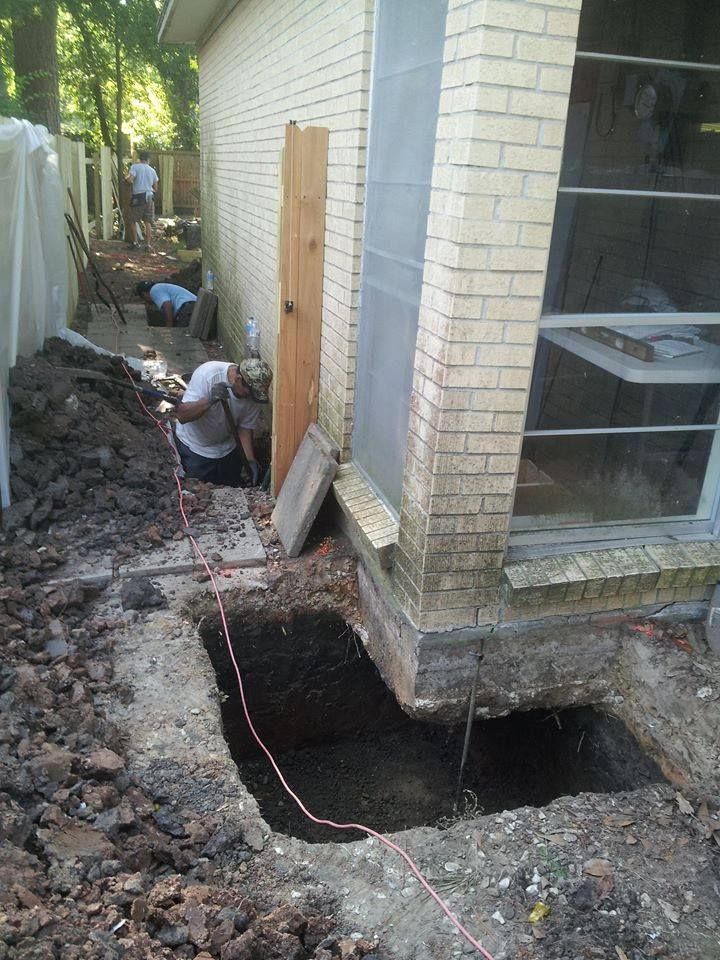
We trace the root zone and locate where roots are moving toward the foundation. A trench is cut along the protected line, and a high-density polyethylene or concrete barrier is installed at the proper depth to deflect roots downward and away. The trench is backfilled, the surface restored, and where roots already caused damage, we repair concrete or drainage so the repair holds.
How Tree Roots Damage Foundations
Trees do not usually break a foundation in a single season. Roots creep through the soil year after year, seeking moisture and following the path of least resistance. Under a slab, they find the damp soil along the edge, the cool shade under an overhang and any crack already present. Across East Texas — from the piney woods around Lufkin to the oak-lined streets of Tyler and Nacogdoches — the warning signs tend to follow a pattern.
- Concrete driveways, sidewalks and patios lifted or cracked by roots
- Slab edges cracked or pushed out of line along a tree side of the house
- Slow drains and recurring sewer line blockages from root intrusion
- Doors and windows that stick on the side closest to a large tree
- Hairline cracks in walls or tile that reappear after patching
- Moisture drawn from soil under the slab, causing settlement on one side
Why Root Barriers Matter in East Texas
East Texas has a combination that makes root damage common. Our soils shrink and swell with the seasons, and the cracks that form as clay dries give roots an easy path toward a foundation. Long, warm growing seasons mean roots expand for more months of the year than in cooler regions. And mature oaks, pines, sweetgums and pecans around many homes have root systems that reach far beyond the drip line.
Older neighborhoods add their own challenges. Homes built before modern root-control practices sit close to trees that have had decades to spread. Root barriers are the practical way to keep a mature, healthy tree while protecting the home — you are not choosing between the tree and the foundation when the barrier is installed correctly.
Our Root Barrier Installation Process
- Free inspection, including a walk of the foundation line, driveway, patios and utility routes to locate signs of root movement.
- Identification of the trees, root zones and likely paths, plus a review of soil type and drainage around the structure.
- Trenching along the protected line at the depth needed for the tree species and barrier type — typically 24 to 36 inches.
- Barrier installation using high-density polyethylene panels or poured concrete, sealed and overlapped so roots cannot pass through joints.
- Repair of any existing damage: lifted concrete, cracked slab edges, damaged drainage or blocked sewer lines.
- Backfill, surface restoration and a walkthrough so you understand how to keep the barrier working long term.
What Drives Root Barrier Cost
Root barrier pricing is shaped mostly by the length of the barrier, the depth required and what the trench crosses. A short run along a driveway is a much lighter job than a full perimeter installation around a slab, or a barrier that must pass under a utility line. The written estimate breaks the work out so you can see where the effort goes.
- Total linear feet of barrier needed
- Depth required for the tree species and soil
- Barrier material: high-density polyethylene or poured concrete
- Access to the trench line — fences, landscaping, driveways, utilities
- Repairs to concrete, drainage or plumbing already damaged by roots
When a Root Barrier Makes Sense
A root barrier is the right fix when a mature tree near the home is moving soil, lifting concrete or reaching toward the foundation and utilities. It is far less expensive than repairing a damaged slab or replacing a sewer line, and it lets you keep a healthy tree on the property.
It is not the answer for every property. Small, young trees set well back from the house may never need a barrier. And if the foundation has already failed on the tree side of the home, a barrier alone will not lift it — the foundation needs repair first, then a barrier protects the repair. We would rather tell you that up front than sell you a barrier that does not solve the problem.
Root Barrier Installation Across Henderson and East Texas
Jac-It has installed root barriers and repaired root-damaged foundations out of Henderson for more than 25 years, from rural acreage homes in Rusk County to historic houses in Nacogdoches, Marshall and Palestine and boom-era neighborhoods in Longview and Kilgore. We also work Tyler, Lufkin, Jacksonville, Livingston and Huntsville. Call 430-352-6085 or 1-877-65-JACIT for a free inspection.
Related Services
Root Barriers Across East Texas
Based at 1206 W Main St in Henderson, we serve homeowners throughout East Texas, including: